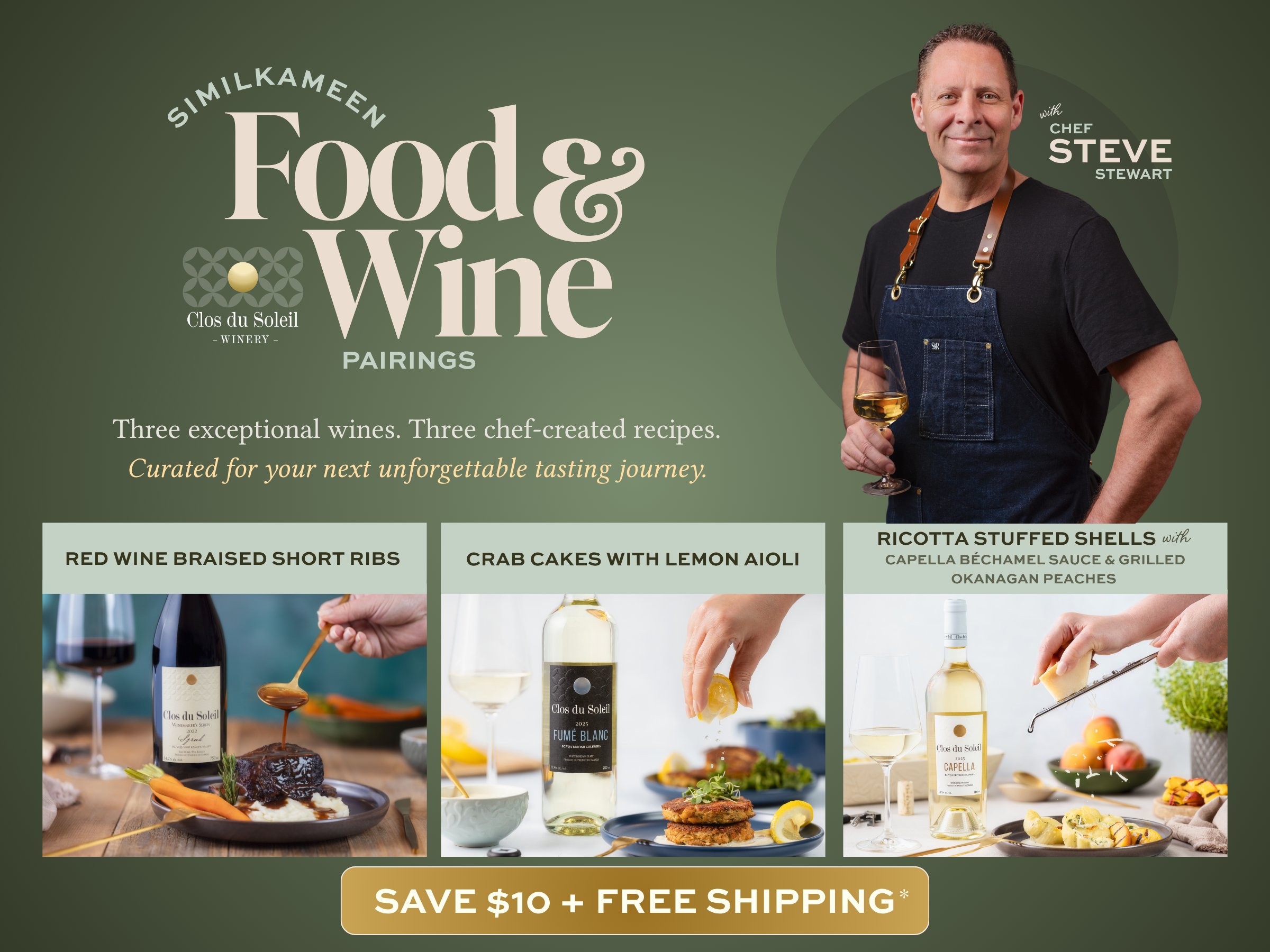
Three exceptional wines. Three chef-created recipes.
Curated for your next unforgettable tasting journey.
Three exceptional wines.
Three chef-created recipes.
Curated for your next unforgettable tasting journey.
Clos du Soleil
Celebrating Twenty Years with Three Chef Created Recipes
This year marks two decades since a small group of wine lovers planted their first vines on the Upper Bench in Keremeos, betting the Similkameen Valley could produce something special. Twenty years later, Clos du Soleil is one of BC’s most respected wineries, and we’re celebrating with three wines and three recipes built to go right alongside them.
Below, you’ll find the recipes, followed by the story of how a wild, windy, rocky valley became one of Canada’s most distinct wine regions.
Clos Du Soleil Similkameen Food & Wine Pairings
PURCHASE WINE COLLECTIONClos du Soleil
Similkameen Food & Wine Pairing Recipes
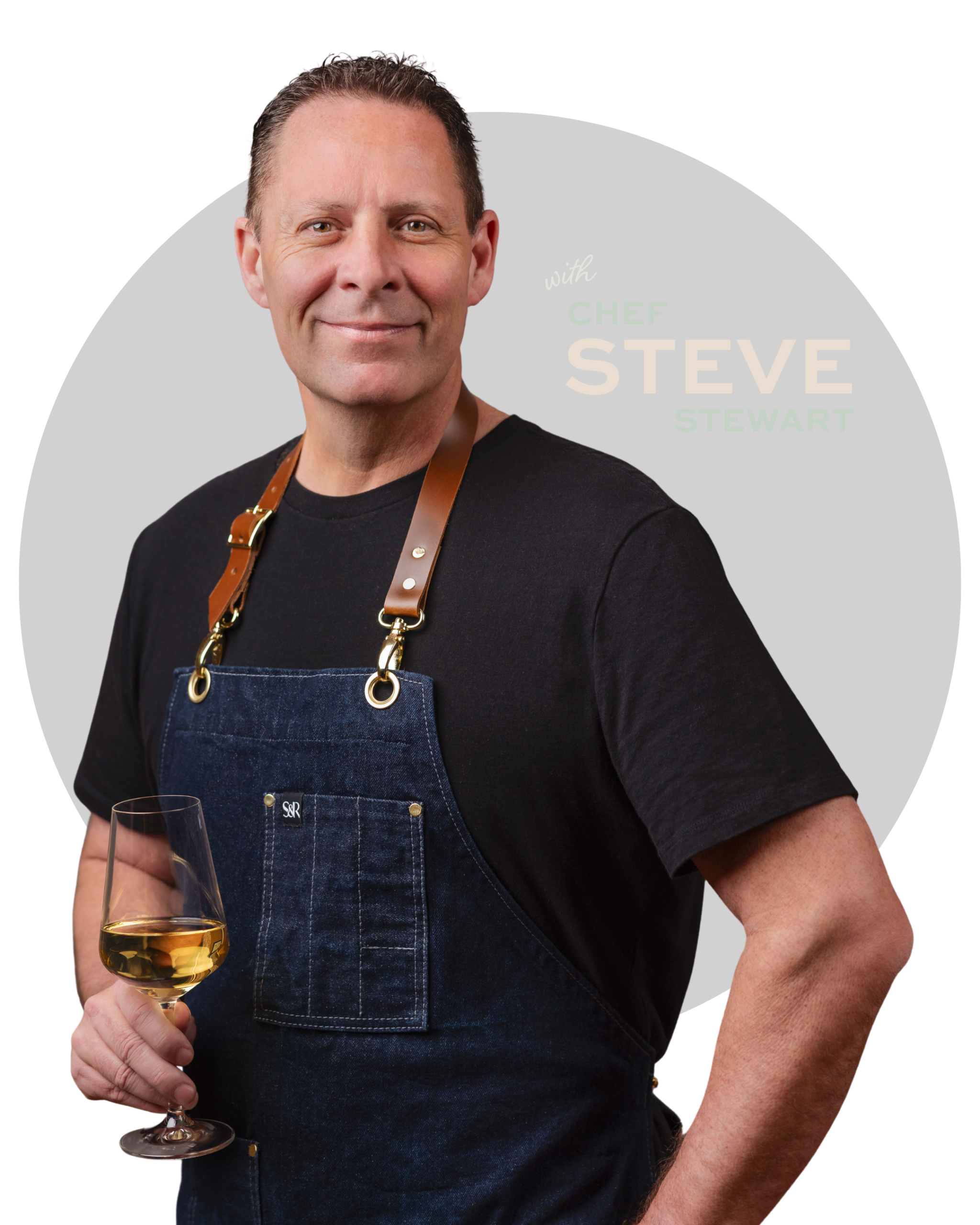
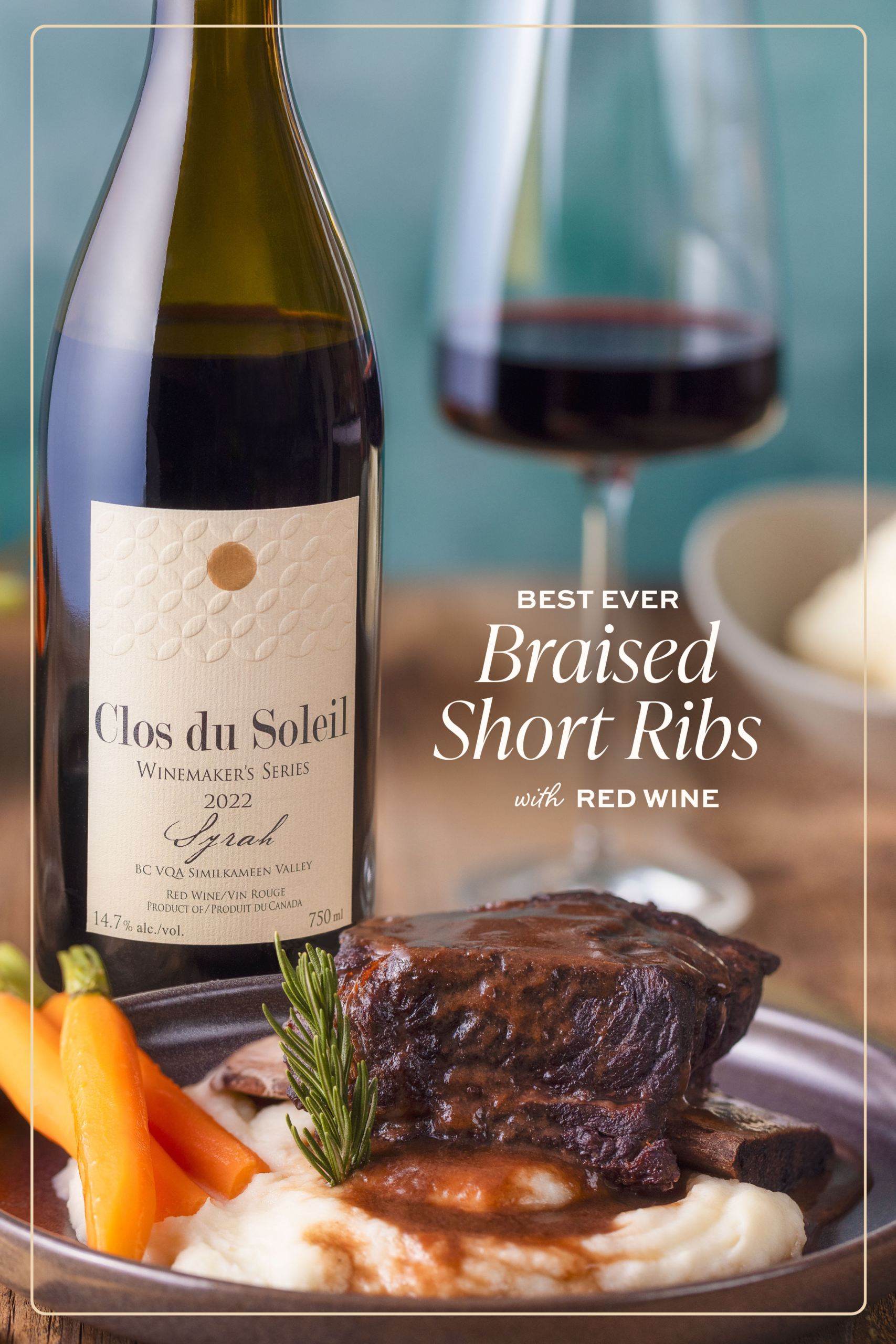
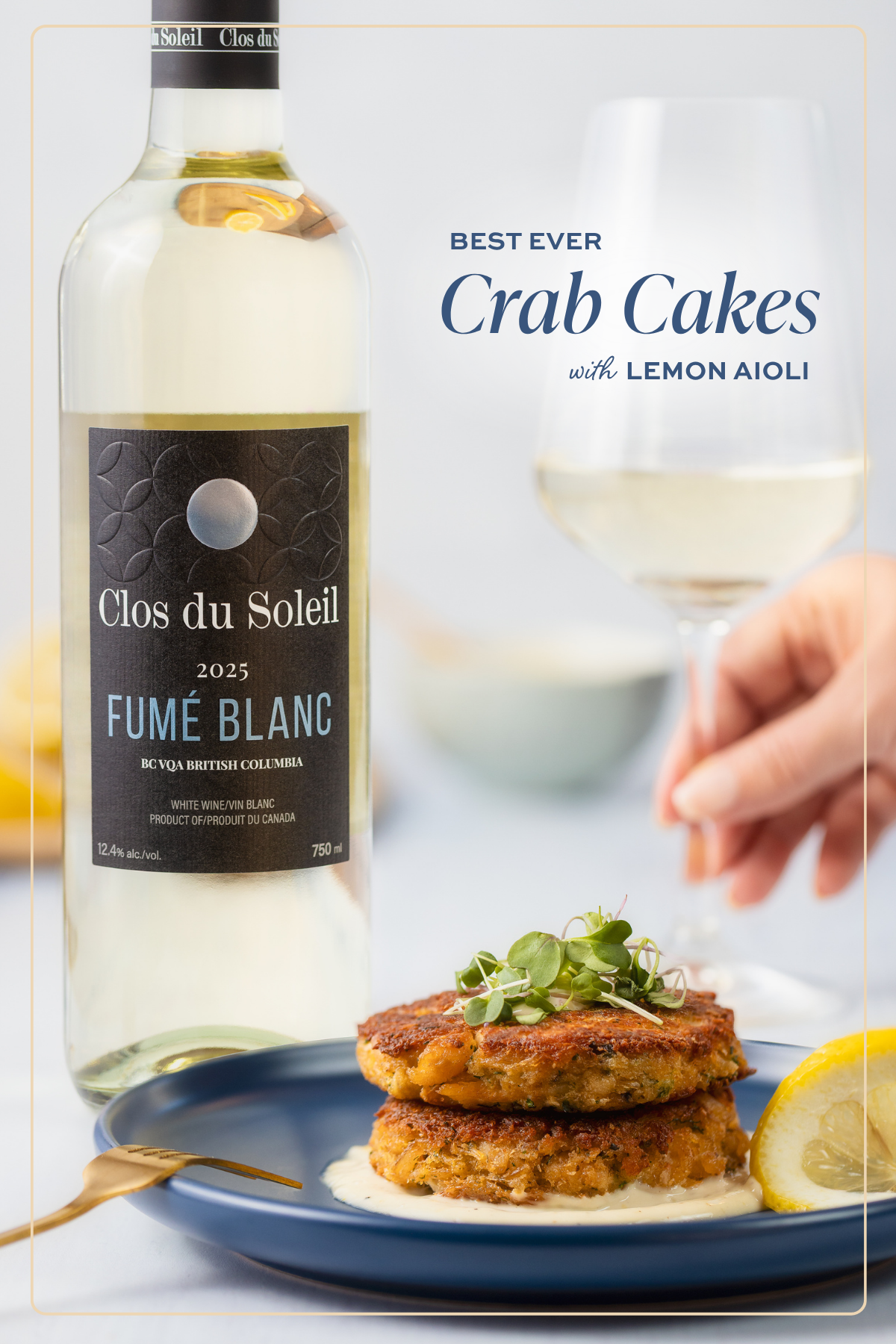
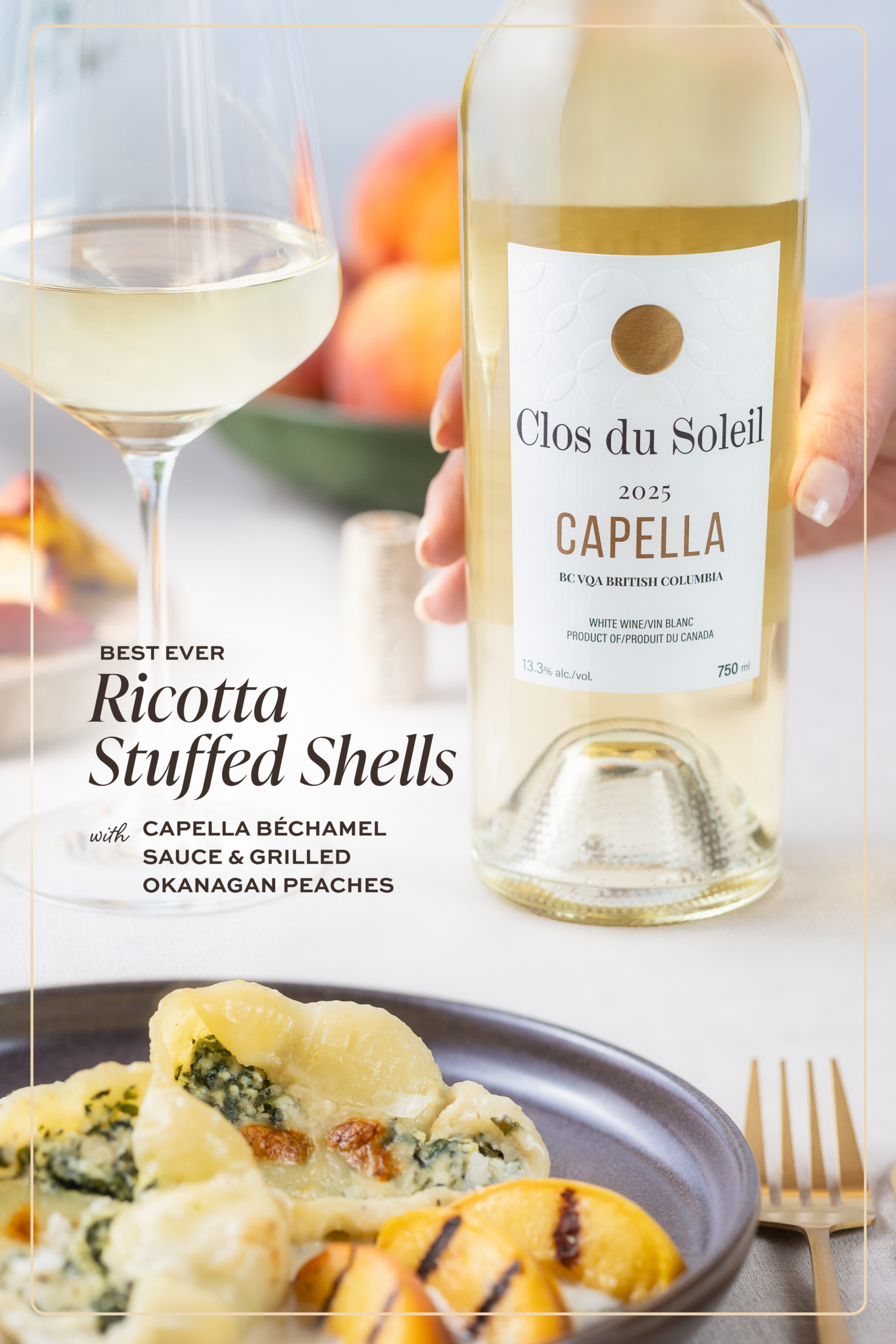
Chef Steve created each dish specifically for its wine. Short ribs for the Syrah, rich enough to match its dark fruit and spice. Crab cakes for the Fumé Blanc, bright and briny alongside its acidity. And ricotta stuffed shells with Okanagan peaches for the Capella, something soft to sit next to its structure.
One Recipe Is Reserved for
Wine Club Members
Alongside this collection, Clos du Soleil has commissioned a fourth recipe that’s released first to Wine Club members. Get in the club to get access.
Clos Du Soleil Similkameen Food & Wine Pairings
PURCHASE WINE COLLECTIONClos du Soleil
Celebrating its 20th Anniversary
Twenty years ago, the Similkameen was still a question mark. Most of British Columbia’s wine industry was building around the lakes of the Okanagan, and few people believed this narrow, windswept valley could produce world class Bordeaux varieties.
A small group of wine lovers saw something different. They made a bet nobody was sure would pay off, planting 2.6 hectares on the Upper Bench in Keremeos in 2006. Cabernet Sauvignon, Merlot, Cabernet Franc, Malbec, Petit Verdot, Sauvignon Blanc, and Sémillon, all in a valley that had never proven itself as a home for Bordeaux inspired wines.
What they saw was a landscape unlike anywhere else in British Columbia. The Similkameen runs east to west rather than north to south, with no lake to soften its climate. Wind funnels through the valley, rocky mountains absorb heat during the day and release it slowly at night, and young mineral rich soils force the vines to work deep below the surface. Together, those conditions produce wines with remarkable freshness, structure, minerality, and a savoury character that has become the valley’s signature.
Twenty years later, Clos du Soleil farms just under 40 acres across five vineyards, and the valley that once borrowed the Okanagan’s name to explain where it was has earned a reputation entirely its own, along with its own wine region appellation to match!
Michael Clark has been making the wine since 2012. His approach is mostly to stay out of the way and trust the fruit. Organic, biodynamic, wild fermentation, as little handling as possible. He says the valley has a personality unlike anywhere else he’s worked, in Europe or in Canada, and his job is just to let that come through in the glass.
The valley is narrow and dramatic. Rock faces rise straight up from the valley floor. Wind moves through like it has somewhere to be. The soil is young and mineral-rich, still eroding off the mountainsides year after year, carrying minerals down into the vineyards with every season. Spend time here and you begin to understand why winemakers talk about the Similkameen as a place with its own unmistakable identity.
The geography shapes everything. The mountains absorb heat during the day and release it slowly after dark, extending the ripening window. Constant winds keep the vineyards dry and healthy, reducing the need for intervention. The soils are so young and mineral-dense that the vines have to work hard, sending roots deep to find what they need. That effort shows up in the glass as concentration, acidity, and a minerality you don’t find in many other BC wines.
Ask winemaker Michael Clark what a blind taster would notice about a Similkameen wine and he doesn’t hesitate.
“Similkameen wines exhibit dazzling acidity, ripe fruit character, an unmistakable minerality, and a savoury herbal character. You can smell the wild sagebrush, the crumbling rocks, and the fierce wind in every glass.”
Those are the qualities Michael works to translate from vineyard to bottle.
Clos du Soleil was founded in 2006, which makes 2026 their twentieth anniversary.
Two decades of making wine in a valley that most of British Columbia is still discovering.
2006 -2026
Celebrating their 20th Anniversary
The name means “vineyard of the sun.” A clos is an enclosed vineyard, and at Clos du Soleil the vineyards sit nestled into the pocket of steep mountainsides that rise behind them, a natural enclosure that shapes the microclimate as much as any decision made in the winery. The French name also signals something about the philosophy here. Clos du Soleil makes wines that are rooted in the Similkameen but informed by the great wine regions of France.
Meet the Winemaker
Originally trained in theoretical physics, Michael spent fourteen years in investment management across Canada, the United States, and Europe. He was good at it. But a lifelong obsession with wine was running alongside all of it, and eventually it won.
While living in Geneva, with his wife’s support, he made the decision to change course entirely. He studied winemaking at the Haute Ecole de Viticulture et Oenologie in Switzerland, worked a harvest in St. Emilion in Bordeaux, and completed a distance program in winemaking at UC Davis. His graduate background in physics meant he already had a foundation in chemistry. What he was building on top of that was something harder to teach: a palate trained over decades of tasting, collecting, and travelling through wine regions around the world.
He came to the Similkameen not because it was the obvious choice but because of what he saw in the valley.
“When I think of the Similkameen, I think of stony soils, sheer rocky mountain cliffs, dramatic vistas, a narrow twisting valley that acts like a wind tunnel, and some of the best fruit in the entire world. It is my job as winemaker to translate that wild scenery into every bottle of wine.”
Michael talks about the Similkameen the way someone talks about a place they chose deliberately and have never stopped being grateful for.
The mountains are not incidental. They absorb heat, channel wind, and are the source of the minerals in the soil. The young, eroding soils are part of what makes the valley so distinctive, still breaking down from the rocky mountainsides above, carrying mineral complexity into the vineyards year after year.
“Every wine we produce at Clos du Soleil is intended to tell a story. This Syrah tells a story of a rocky south-west facing vineyard, overlooking some of the most beautiful mountains in the world. It tells a story of vines that have to work hard to send their roots down through the mineral-rich soils. It tells a story of the Similkameen.”
When we asked what he hoped someone experienced when they opened a bottle, his answer was disarmingly simple.
“Happiness. In the end, wine is all about enjoyment. But if somebody tastes this wine, and then closes their eyes, and sees visions of stony mountains and a wild valley, then I will know I have done my job.”
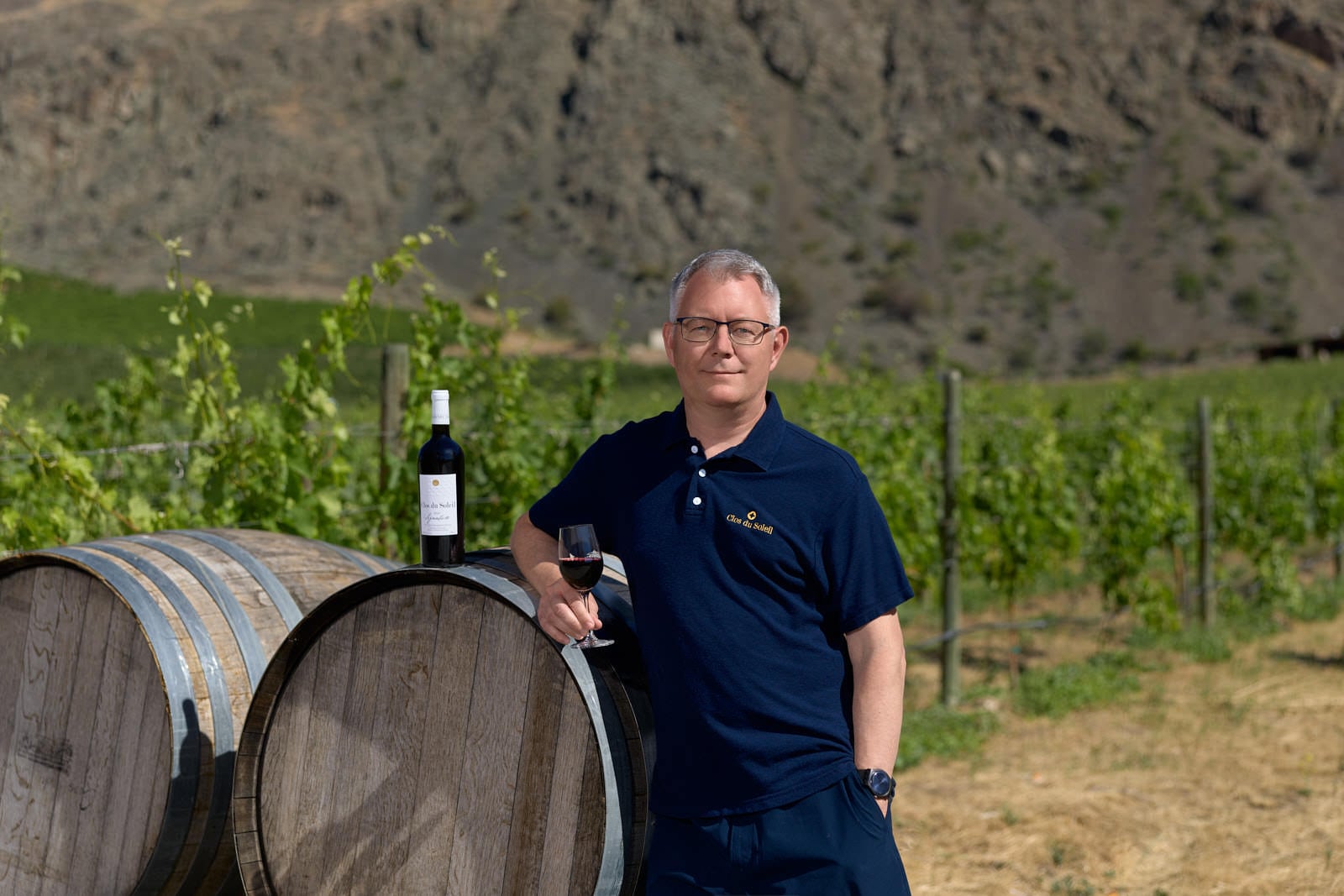
Brandon Elliot Photography for Clos du Soleil
Terroir and Winemaking Philosophy
Michael’s approach in the winery is as restrained as the valley is dramatic.
He talks about minimal intervention not as a trend but as a logical conclusion. If the terroir is already in the grapes when they arrive, then the winemaker’s job is to protect it, not add to it. That means avoiding unnecessary movement of the wine, limiting pumping, and listening to what each vintage is telling him rather than imposing a house style.
“Terroir driven means respecting the fruit and protecting the fruit. The terroir is already there, in the grapes. It is not something that can be added. So the winemaker’s job is to just allow what is already there to shine forth. Most of the time this means doing almost nothing. Just listening to the fruit and protecting its beauty.”
He compares it to raising children. Each vintage has its own personality, already formed. His job is to help it reach its potential in its own time.
“Quality winemaking is all about being gentle. We try to avoid even pumping or moving the wine or juice more than we absolutely have to. In a real sense, the land makes the wine. We don’t.”
Bring the Similkameen to Your Table with Clos du Soleil
Spend three evenings discovering one remarkable winery through chef-created recipes, extraordinary wines, and the stories that make every bottle worth remembering.
Spend three evenings discovering one remarkable winery through chef-created recipes, extraordinary wines, and the stories that make every bottle worth remembering.
Plan Your Visit
ADDRESS
2568 Upper Bench Road
Keremeos, BC · V0X 1N4
(250) 499-2831
closdusoleil.ca
GETTING THERE
About 45 minutes west of Penticton and an hour and forty minutes from Kelowna. The Similkameen has a small number of producers, most a short drive from each other. Worth making a full day of it.
Tasting Options
Thursday through Monday, 10 am to 5 pm from May onward. Hours expand as the season progresses. Walk-ins welcome when space allows.
STANDARD TASTING
A 20-minute guided tasting of 3 wines, $10 per person. Fee is redeemable toward any wine purchase made at the time of your tasting. Wine club members taste free. Cancel at least a week ahead for a refund.
RESERVE TASTING
A 50-minute guided tasting of 6 wines including flagship releases, $20 per person, with a possible vineyard tour. Not redeemable toward purchase. Minimum 2 guests, maximum 8. Book at least 72 hours in advance. Wine club members taste free.
Do you have questions about your purchase?
All wine purchases are made directly from Clos du Soleil. The winery handles all orders, payments, shipping, and customer service, so please contact them directly with any questions about your purchase.
Shipping destinations, rates, and delivery timelines are determined by the winery. Please refer to the winery’s website for current shipping policies and availability.
BestEver.Guide does not sell, process, or ship wine. Every Food & Wine Collection is independently produced by BestEver.Guide in collaboration with the featured winery, with all wine sales remaining the responsibility of the winery.